“Finch and Midland” and the Art of Saying Nothing Loudly
How a film about the Hong Kong diaspora in Canada manages to miss the mark on every level.
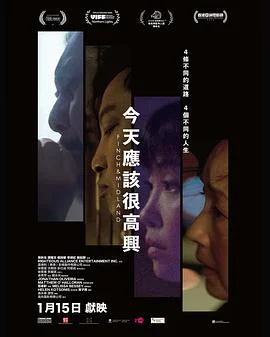
I walked into Finch and Midland with a glimmer of hope. A film premiering at VIFF, helmed by a young Chinese-Canadian filmmaker, focused on the Hong Kong diaspora in Canada — this could’ve been the kind of timely, emotionally charged, culturally specific story that we rarely see on screen.
Instead, what unfolded was a mess of disconnected clichés, shallow writing, and squandered opportunities masquerading as “universal storytelling.”
1. Disconnected Stories That Say the Same Empty Thing
The film presents itself as an ensemble piece, interweaving the stories of multiple Hongkongers living in Canada. But these aren't interconnected in any meaningful way. Instead, we get separate, clumsily written vignettes that never build into a thematic whole.
There’s the washed-up 90s Cantopop singer, reduced to performing for tour groups in tourist restaurants, spiraling into alcoholism and flaking on his daughter’s recital. There’s the factory manager (played by the legendary Anthony Wong, who frankly deserves better), caught between the white boss he imitates and the Hongkong factory workers he’s asked to fire. There’s the lonely middle-aged woman glued to dating apps, swiping through a sea of other Hongkongers (because apparently no one else exists in Toronto?), whose arc culminates in a borderline misogynistic farce of a seduction attempt on a pizza guy.
What do these stories have in common? Generic tropes, lifeless plotting, and a shocking lack of cultural texture. These aren’t diasporic stories — they’re lifeless soap opera sketches that could take place in literally any country, in any time, with the Hongkong elements sloppily pasted on top.
2. A Bubble of “Representation” That Represents No One
The strangest thing about Finch and Midland is how it manages to isolate the Hong Kong diaspora from everyone else. There are barely any non-Hongkongers in the film. No interaction with the broader Chinese community, no sense of Toronto as a multicultural city.
It’s as if the director only sees the diaspora as a closed loop — a self-contained bubble where everyone speaks Cantonese, everyone is sad, and everyone is stuck. This is not authenticity. This is myopia.
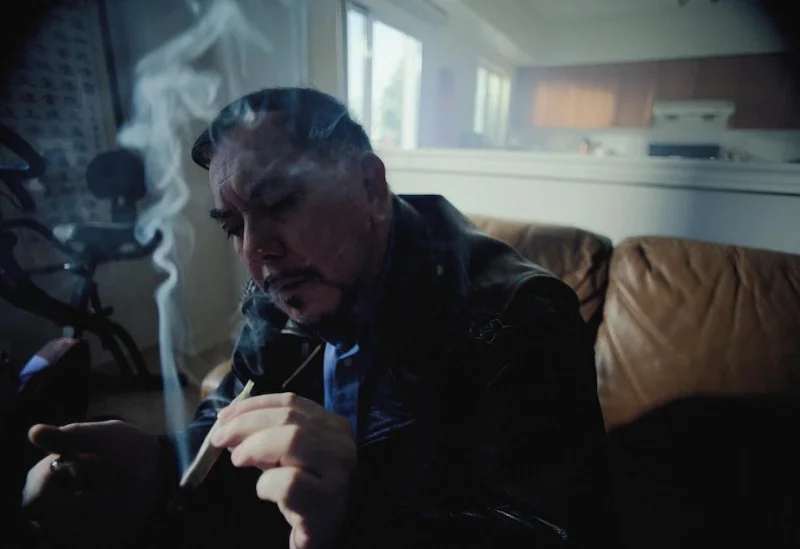
Even the one thread that had potential — Anthony Wong’s character navigating assimilation, language politics, and workplace power structures — is ultimately neutered by a bizarre subplot where he befriends a weed-smoking teenage Hongkonger squatter. It feels like the director ran out of ideas and decided “emotional bonding over weed” was the solution. That scene should be studied in screenwriting classes — as a cautionary tale.
3. Cringe-Worthy Writing & Misguided Directorial Choices
Let’s talk writing. These scripts feel like Film School Year 2 assignments — painfully on-the-nose, lacking subtext, with zero understanding of narrative structure. No inciting incidents. No escalation. No dramatic payoff. Just trauma tropes strung together by mopey dialogue and Cantonese ballads.
The woman on the dating apps? Her arc ends with a scam, a failed seduction, a cruel portrayal of her body and loneliness, and a forced “healing moment” with her mother that resolves nothing. What was the point? Was it social commentary? Black comedy? Melodrama? The film doesn’t know — so it just mopes.
And speaking of emotional shortcuts: any time the director wants the audience to feel something, he just slaps on a mushy Cantopop track, and these cliche pop songs are doing all the emotional heavy lifting. Instead of building mood through storytelling, cinematography, or sound design, the film leans on music like a crutch. It's the cinematic equivalent of cueing a sad violin when you don’t know how to write grief. The result? A movie that often feels less like narrative cinema and more like a clumsy, out-dated music video.
4. No Nuance, No Vision, No Justification
There is a difference between universal and generic. This film mistakes vagueness for universality and ends up with a narrative so empty, so recycled, it could be AI-generated. Except an AI might have added more subplots.There’s no cinematic eye at work here. No thought given to framing, camera movement, or mise-en-scène. The production design is flat, the cinematography uninspired. It’s the kind of film where you can feel how proud the director is of their “quiet” storytelling — but all that quiet leads to a deadening silence. By the end, you feel like you’ve seen... nothing.
Final Verdict: A Case of “He Tried” Cinema
Finch and Midland isn’t even bad in an interesting way. It’s just bad in the most disappointing way — the kind that feels earnest, effortful, and completely out of its depth. After the screening, the director mentioned that all of the stories were based on real-life anecdotes he had heard from others.
But that’s not enough. Storytelling isn’t transcription. It’s not enough to collect fragments of someone else’s life and copy-paste them into a script. You need to observe, to think, to interpret — to understand people in context, in place, in history. Without that, all you're doing is repeating, not representing. And it shows: the stories feel shallow, performative, and strangely dead behind the eyes.
The film lacks sincerity not because the subject matter isn’t real, but because the world around the characters doesn’t exist. These Hongkongers are floating in a void — a fantasy version of Toronto where no one else seems to exist. No white Canadians, no mainlanders, no Black or South Asian communities, no social fabric. Diaspora doesn’t happen in a vacuum.
You can’t tell a diaspora story without situating your characters in the time and space they actually live in. When you isolate them, you erase the relational tensions — the cultural frictions, the racism, the assimilation, the community — everything that gives real diaspora stories their depth, their soul. And once you do that? Your characters stop feeling real. Your story dies with them.
It’s clear the filmmaker wanted to say something imortant. But cinema isn’t about wanting. It’s about doing. About making choices. About seeing people clearly. This film doesn’t. And it wastes its biggest opportunity — especially in the one storyline that flirts with something deeper, Anthony Wong’s brief confrontation with whiteness and class dynamics — only to retreat into clichés and half-baked redemption arcs.
This is the kind of project that should’ve remained a short film, or a writing workshop draft. Or at the very least, someone on the creative team should have asked the director the one question that could’ve saved it all: “What are you really trying to say — and who are you saying it to?”
Landy
2026-01-19 22:50:07
1077 Canton Rd
2026-01-17 19:26:01
张翔森
2026-01-16 00:34:00
Silence
2026-01-15 22:40:15
木头诶
2026-01-15 15:04:03
Wallflower
2026-01-03 17:56:01